Click PLAY to begin the journey — then scroll for the complete 2000+ word analysis.
God of War – Complete Overview
For over two decades, the God of War series has stood as a colossus in the gaming industry. What began as a hyper-violent revenge fantasy set in the sun-drenched, morally bankrupt world of Greek mythology has since evolved into a nuanced, emotionally devastating character study set against the frigid, mystical backdrop of Norse legend. Few franchises have successfully reinvented themselves while retaining their core identity. God of War didn’t just change its setting and gameplay; it forced its protagonist, Kratos, to grow up—and in doing so, asked its audience to grow with him. This complete overview chronicles the journey of the Ghost of Sparta, from the ashes of Olympus to the snows of Midgard.
⚡ Part I: The Greek Era – Rage, Revenge, and Ruin (2005–2013)
The Birth of an Anti-Hero
Before he was a father, Kratos was a monster. The original God of War (2005) introduced players to a Spartan commander who, betrayed by the Gods and haunted by the accidental murder of his wife and daughter, serves the Olympians in a desperate bid to erase his nightmares. Armed with the iconic Blades of Chaos—twin blades chained to his forearms—Kratos is a force of raw, unbridled fury. The gameplay was revolutionary: “hack and slash” combat combined with puzzle-solving, platforming, and colossal boss fights (like the Hydra and the Minotaur). The narrative, while simple, was effective. Kratos’ quest to open Pandora’s Box and kill Ares ends in a tragic twist: he is offered Ares’ throne, but his memories remain. In a moment of suicidal despair, he throws himself from the highest cliff, only to be saved by Athena. He is now the new God of War, but a prisoner of his own guilt.
Ghost of Sparta & Chains of Olympus
The PSP entries, Chains of Olympus (2008) and Ghost of Sparta (2010), filled in the narrative gaps. Chains detailed Kratos’ final servitude to the Gods before his betrayal, showcasing his relationship with his daughter, Calliope, in the Elysian Fields. Ghost of Sparta was more crucial, revealing Kratos’ hidden past: his brother Deimos, who was kidnapped by Ares and Athena as a child due to a prophecy about a “marked warrior” destroying Olympus. This deepened the tragedy; Kratos’ rage was not just self-loathing but a fury born of familial loss.
God of War II: The Road to Ruin
God of War II (2007) is widely considered the peak of the Greek-era gameplay. Betrayed by Zeus (who fears Kratos will destroy Olympus), Kratos is stripped of his godhood and killed. His journey to reclaim the power of the Sisters of Fate is a masterclass in escalation. He literally rewinds time, travels to the Island of Creation, and kills every mythical figure in his path—from the Griffin to the Kraken-like Perseus. The ending is a cliffhanger for the ages: Kratos uses the Loom of Fate to travel back to the Great War between the Titans and the Gods, rallying the Titans to storm Mount Olympus. The final shot of Kratos riding Gaia, the earth Titan, into battle against Zeus is the franchise’s most iconic image.
God of War III: The End of an Era
God of War III (2010) delivered on its promise of apocalyptic scale. Opening with a brutal boss fight against Poseidon (seen from the Titan’s perspective), the game never lets up. Kratos systematically dismantles the entire Greek pantheon: he crushes Helios’ head to use as a lantern, rips Hermes’ boots from his severed legs, snaps Hera’s neck, and forces Hephaestus to build weapons before killing him. The most infamous sequence is the fight with Cronos, the Titan King, where Kratos climbs the mountain-sized god to stab him in the forehead. Narratively, the game forces Kratos to confront his actions. By the end, he has killed Athena (twice), Zeus, and inadvertently unleashed Pandora’s Box, releasing “Hope” into the world. With nothing left to destroy and everyone he loved gone by his own hand, Kratos impales himself with the Blade of Olympus, releasing the power of Hope to humanity. A post-credits scene shows a trail of blood leading off a cliff—into the sea. Kratos, it seems, cannot die, and refuses to stay dead.
❄️ Part II: The Norse Era – Fatherhood, Growth, and Redemption (2018–2023)
A New Beginning: God of War (2018)
The 2018 God of War (often called God of War IV) is a soft reboot, a sequel, and a genre-defying masterpiece. Director Cory Barlog took a massive risk: ditching the Greek setting, changing the combat system from hack-and-slash to an over-the-shoulder camera, and introducing a second playable protagonist—Kratos’ young son, Atreus. Years after the Greek genocide, Kratos has migrated to the Norse realm of Midgard, remarried a giantess named Faye (now deceased), and is trying to suppress his rage. The game’s central premise is deceptively simple: “Spread my ashes from the highest peak in all the realms,” Faye’s final request.
Gameplay Evolution: The Blades of Chaos are replaced by the Leviathan Axe—a frost-imbued weapon that can be thrown and magically recalled (inspired by Thor’s Mjolnir). The combat is weightier, more deliberate, and deeply strategic. The camera never cuts; the entire game is presented in a single, continuous shot, immersing the player in Kratos’ perspective.
Narrative Core: The story is about parenthood. Kratos, terrified of his son discovering his murderous past, is emotionally distant and rigid. Atreus, sickly and insecure, struggles to earn his father’s respect. Their journey through the Lake of Nine, encountering the witch Freya, the blacksmith dwarves Brok and Sindri, and the mysterious Baldur (the game’s main antagonist), becomes a heartbreaking tutorial on how to be vulnerable. The twist—that Baldur was sent by Freya (his mother) and that Faye was a giant who foresaw the entire journey—recontextualizes everything. The final line, “We have to be better,” signals Kratos’ complete transformation.
God of War Ragnarök: The Prophecy Fulfilled
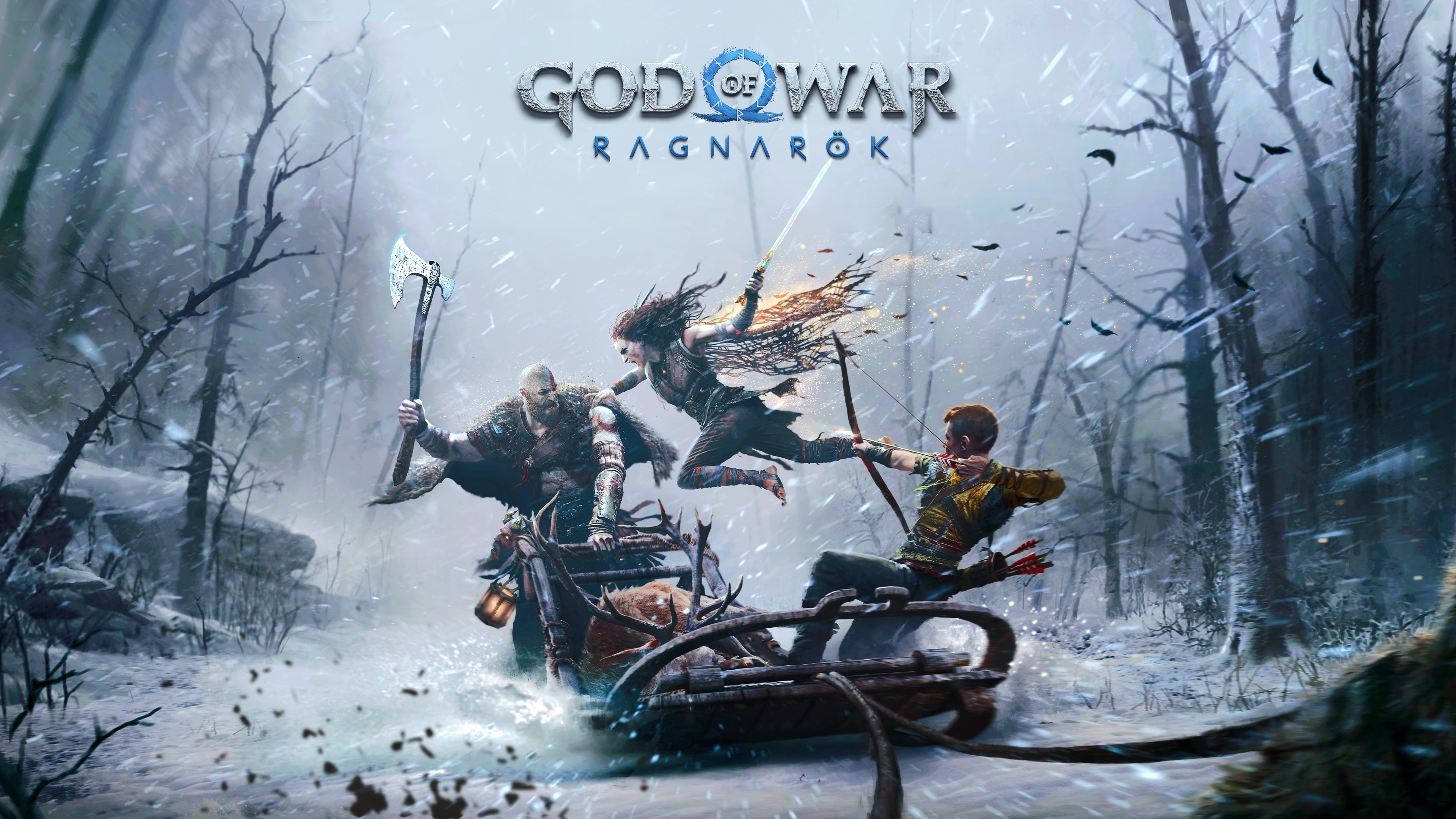
God of War Ragnarök (2022) had the unenviable task of concluding the Norse saga in two games (rather than a trilogy). It largely succeeds by expanding scope and emotional complexity. Taking place three years after the first game, Fimbulwinter (the great winter preceding Ragnarök) is ending. Kratos, now a more patient but still haunted father, must contend with a new threat: the thunder god Thor and his tyrannical father, Odin.
Key Innovations: The game adds the Draupnir Spear (an infinite wind-based weapon) and allows players to control Atreus in dedicated sections. Atreus’ gameplay is faster, more magical, and reflects his identity crisis—he is a half-giant, half-god, and a shape-shifter.
Character Arcs: Ragnarök is a game about breaking cycles of violence. Kratos fears being a destructive force like Zeus. He is offered a prophecy showing him dying and Odin ruling. He spends the game trying to avoid war, eventually realizing that “preparing for war” is not the same as “starting one.” Atreus (real name: Loki) seeks his own path, nearly falling under Odin’s manipulative tutelage. Thor is the perfect foil: a violent, alcoholic, broken son of an abusive father (Odin). Freya begins as a vengeful widow but overcomes her grief to ally with Kratos.
The Ending: The climax is not a battle to destroy Asgard, but to save the realms from Odin’s tyranny. Kratos rejects the prophecy of his own death. He spares Thor, convincing him to turn on Odin (Odin kills Thor for his defiance). In the final confrontation, Kratos, Atreus, and Freya work together to trap Odin’s soul in a marble, which Sindri—devastated by the death of his brother Brok—smashes with a hammer. The cost is high. Atreus leaves to find the remaining giants, Sindri refuses to forgive Kratos, and Kratos is finally seen as a “rebuilder” rather than a destroyer. The final shot is Kratos seeing a new prophecy: not of his death, but of him being worshipped as a benevolent god, surrounded by the people of the realms. He breaks down in tears—the Ghost of Sparta is finally at peace.
🏺 Spin-offs, Mobile Games, and Legacy
Beyond the mainline entries, God of War: Betrayal (2007) was a mobile 2D side-scroller. The franchise has seen comic book series (notably the 2018 prequel comic showing Kratos arriving in Midgard) and even a poorly received live-action film attempt that never materialized. Most notably, a God of War TV series is in development for Amazon Prime, promising to adapt the 2018 game’s story. The series has influenced countless games, from Hellblade: Senua’s Sacrifice to Star Wars Jedi: Fallen Order. Its signature “single cut” camera in the 2018 game remains a technical benchmark.
🧠 Thematic Analysis – Why God of War Matters
At its core, God of War is a series about the consequences of rage. The Greek saga is a cautionary tale: absolute power, combined with absolute trauma, leads only to absolute ruin. Kratos destroys the world he inhabits because he cannot process his grief. The Norse saga is the antidote: a story about therapy disguised as a video game. Kratos learns to apologize, to teach, and to be vulnerable. The famous line, “Do not be sorry, be better,” encapsulates the entire series’ thesis. The series argues that redemption is possible, but only through action, not absolution. The recent Valhalla DLC (2023) provides an epilogue where Kratos enters Valhalla, confronts his past selves, and finally accepts the title “God of War” as a responsibility to protect others.
🔮 The Future – What’s Next for Kratos?
With Ragnarök‘s free Valhalla DLC (2023), Santa Monica Studio provided a clear hint: Kratos sees a vision of a future where he is worshipped in Egypt, with a sandstorm blowing in the distance. This strongly suggests that God of War’s next saga will likely take place in Egyptian mythology. The developers have long expressed interest in Egypt (it was the original setting before Norse), and with Kratos now a wise, reformed god, the potential for stories about the afterlife, the judgment of souls, and a pantheon of animal-headed deities is immense. Wherever Kratos goes, he will carry the Leviathan Axe, the memory of Faye, and the hard-won lesson that we can be better.
Conclusion: The God of War series is a rare beast: a blockbuster franchise that evolved its protagonist as its audience aged. It began as a teenage power fantasy—a screaming, muscular man tearing a god’s head off. It matured into a middle-aged meditation on fatherhood, trauma, and the quiet courage of putting down your weapons. From the corpse of Ares to the peak of the highest mountain, Kratos’ journey is gaming’s greatest tragedy turned into its most hopeful redemption arc. The God of War is no longer a destroyer of worlds. He is a father, a teacher, and—at long last—a man at peace. And that is a complete overview worth celebrating.
📖 About Us
We are a dedicated content platform focused on deep-dive gaming analysis, mythologies, and cinematic storytelling. Our team of writers and lore enthusiasts bring you complete sagas — from Greek epics to Norse legends. This God of War overview is part of our “Legacy Series” celebrating the art of video game narratives. Join thousands of fans who explore Kratos’ redemption, fatherhood, and the destruction of pantheons.
📍 Follow for more: deep lore articles, developer interviews, and next-gen analysis.
📬 Contact Us
⚖️ Disclaimer
All content on this page is for informational and entertainment purposes only. God of War is a trademark of Sony Interactive Entertainment. We do not claim ownership of any in-game assets or official media. The video thumbnail and loading interface are for demonstrative experience. Ad placements are managed by revbid.net. This website respects intellectual property and aims to celebrate gaming culture.